

Woodworking is more than just cutting and assembling pieces of wood—it is a craft that combines precision, creativity, and technical skill. Whether you are building a simple shelf or crafting high-end furniture, the quality of your work depends heavily on the woodworking techniques you apply.
Many beginners often struggle with common problems such as uneven cuts, weak joints, rough surfaces, or finishes that do not last. Even experienced woodworkers can face challenges when working with different types of wood, tools, and designs. These issues usually don’t come from a lack of tools, but from not fully mastering the fundamental woodworking techniques.
In today’s competitive furniture industry, expectations are higher than ever. Customers are not just looking for functional furniture—they want products that are durable, visually appealing, and built with precision. Poor craftsmanship can easily lead to customer dissatisfaction, while high-quality work can increase trust, repeat orders, and overall business growth.
This is why understanding and mastering woodworking techniques is essential. These techniques are the foundation that determines whether your project looks amateur or professional. From accurate measuring and cutting to advanced joinery and finishing, every step plays a critical role in the final result.
This guide is designed to help you improve your skills by focusing on 15 essential woodworking techniques that every craftsman should know. Whether you are a beginner looking to build a strong foundation or a professional aiming to refine your process, these techniques will help you work more efficiently, reduce mistakes, and produce higher-quality results.
By the end of this article, you will not only understand the core woodworking techniques but also know how to apply them in real projects to create furniture that is strong, refined, and ready for the market.
Measuring and Marking Accurately
Accurate measurement is the foundation of all woodworking techniques. Without precise measurements, even the most advanced woodworking methods will fail.
Professional woodworkers rely on tools such as measuring tapes, combination squares, and marking gauges to ensure consistency. A small mistake in measurement can lead to gaps, uneven joints, and wasted materials.
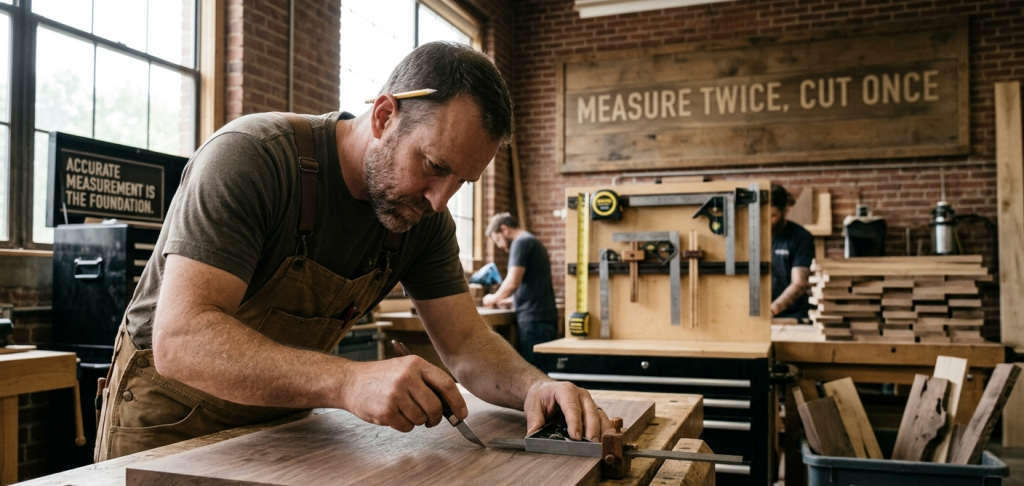
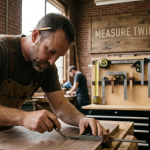
One of the golden rules in woodworking is “measure twice, cut once.” This simple principle can save both time and resources. Using a marking knife instead of a pencil can also improve accuracy, as it creates a fine, precise line.
Consistency in measurement units and careful planning before cutting are essential habits. When you master this technique, every other step in your woodworking process becomes easier and more reliable.
Understanding Wood Grain
Understanding wood grain is one of the most overlooked yet critical woodworking techniques. The grain direction affects how wood behaves when cut, sanded, or finished.
There are several types of grain patterns, including straight grain, interlocked grain, and irregular grain. Each type reacts differently to tools and finishing processes.
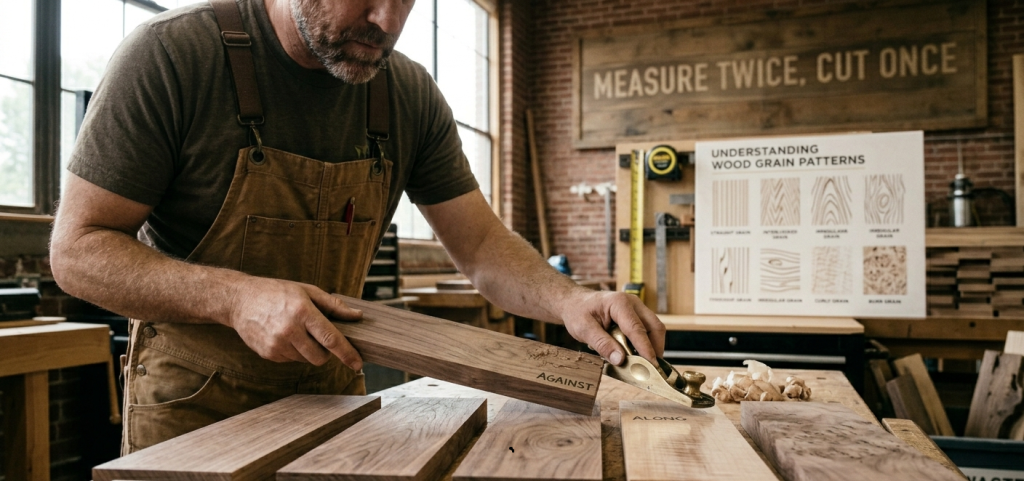
Cutting along the grain typically results in smoother surfaces, while cutting against it may cause tear-out and rough edges. This knowledge helps you choose the right approach for each project.
By paying attention to grain direction, you can improve both the strength and appearance of your furniture. This is especially important for visible surfaces where aesthetics matter most.
Cutting Techniques
Cutting is one of the most fundamental woodworking techniques, and it plays a critical role in determining the accuracy and overall quality of your project. No matter how good your design is, poor cutting will lead to misaligned joints, uneven surfaces, and a final product that looks unprofessional.
There are several types of cutting techniques commonly used in woodworking. Crosscutting is used to cut across the grain, typically to adjust the length of a board. Rip cutting is performed along the grain to reduce the width of the material. Miter cuts are angled cuts often used in frames, corners, and decorative elements. Each type of cut requires proper handling and the right tools to achieve clean and precise results.
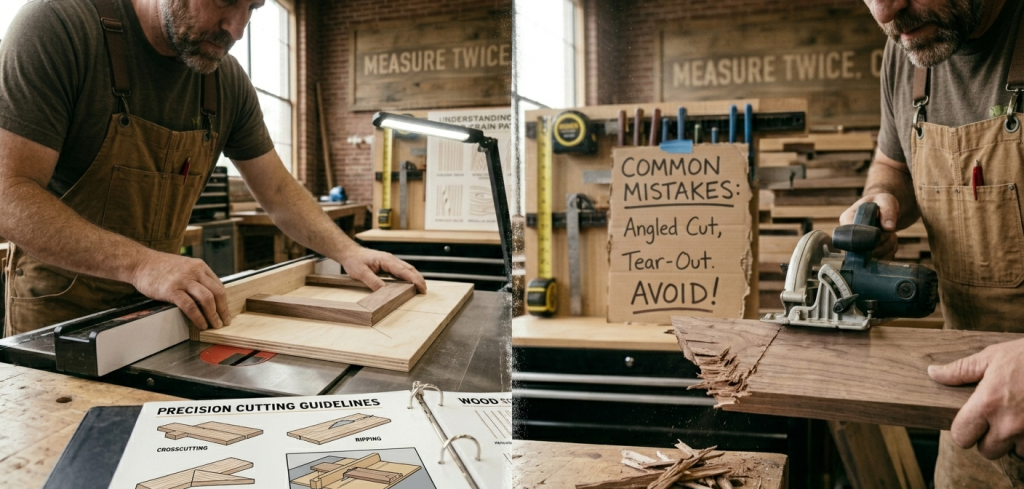
However, many woodworkers—especially beginners—often make common mistakes during the cutting process. One of the most frequent issues is making uneven or angled cuts when a straight cut is required. This usually happens due to a lack of control or not using a proper guide while cutting. Another common problem is tear-out, where the wood fibers break or splinter, leaving rough and damaged edges. Tear-out often occurs when cutting against the grain or when using dull blades.
To avoid these problems, there are several important tips you should follow. First, always use a guide or fence when possible. Tools like table saw fences or straight edges help maintain consistency and ensure straight cuts. Second, maintain a steady and controlled cutting speed. Cutting too fast can cause splintering, while cutting too slowly may burn the wood or create rough edges. Third, always ensure that your blades are sharp and appropriate for the type of cut you are making.
In addition, proper positioning and body control can significantly improve cutting accuracy. Keeping a stable stance and focusing on smooth, continuous motion will help reduce errors and improve results.
Cutting techniques are widely applied in real woodworking projects. For example, when building a table, precise rip cuts are needed to size the tabletop correctly, while crosscuts are used to cut legs evenly. In cabinet or wardrobe construction, accurate panel cutting ensures that all components fit perfectly without gaps. For chairs, angled cuts are often required to create ergonomic designs and stable structures.
Mastering cutting techniques not only improves the quality of your work but also increases efficiency. When your cuts are accurate from the start, you spend less time fixing mistakes and more time assembling and finishing your project.
In the end, cutting is not just about separating wood—it is about shaping the foundation of your entire project. Clean, precise cuts will always result in stronger joints, better alignment, and a more professional final product.
Sanding for a Smooth Finish
Sanding is a finishing technique that greatly impacts the final look and feel of your project. It removes imperfections and prepares the surface for finishing.
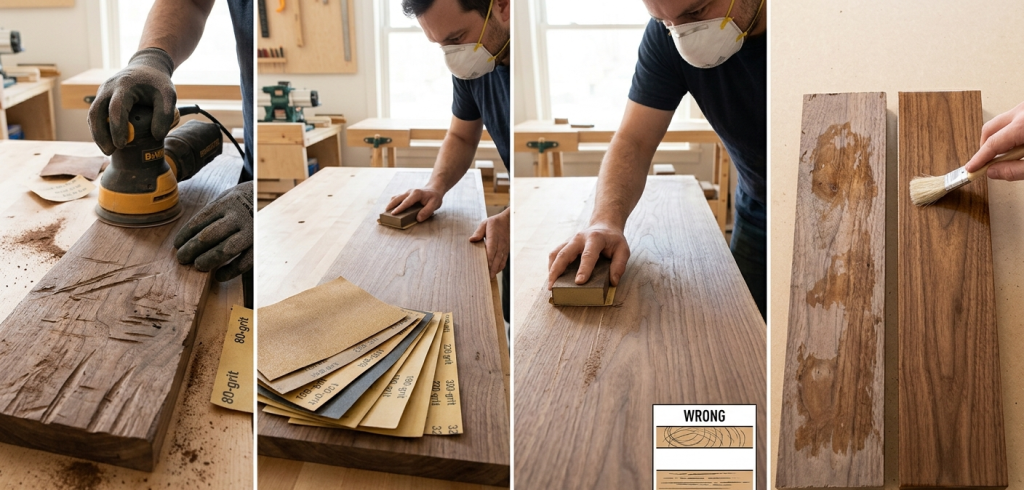
Start with coarse sandpaper to remove rough spots, then gradually move to finer grits for a smooth finish. Always sand in the direction of the wood grain to avoid scratches.
Proper sanding enhances the natural beauty of wood and ensures that finishes like varnish or oil adhere evenly. Skipping this step can result in a rough and unprofessional appearance.
Drilling and Boring Holes
Drilling is an essential woodworking technique used in joinery and assembly. Clean and accurate holes are necessary for screws, dowels, and other fasteners.
Different drill bits serve different purposes, including twist bits, spade bits, and Forstner bits. Choosing the right bit ensures better precision and cleaner holes.
Clamping the workpiece and drilling at a steady speed can prevent splintering. Backing the wood with scrap material also helps maintain clean edges.
Wood Joinery Techniques
Joinery is one of the most important woodworking techniques because it determines the strength of your furniture.
Common joinery methods include:
- Butt joints
- Dowel joints
- Mortise and tenon
- Dovetail joints
Each method has its own advantages. For example, dovetail joints are known for their strength and decorative appearance, while mortise and tenon joints are widely used in structural furniture.
Strong joinery ensures durability and long-lasting performance.
Planing and Flattening
Planing is used to smooth and level wood surfaces. This technique is essential for achieving uniform thickness and flat surfaces.
Hand planes and thickness planers are commonly used tools. Planing removes high spots and imperfections, making the wood easier to work with.
A well-planed surface improves both the appearance and functionality of your project.
Clamping Properly
Clamping is a crucial step in many woodworking techniques. It ensures that glued parts stay aligned while drying.
Using the right type of clamp—such as bar clamps, pipe clamps, or corner clamps—helps distribute pressure evenly.
Improper clamping can lead to weak joints or misaligned parts. Applying even pressure is key to achieving strong and accurate assemblies.
Gluing Techniques
Gluing is an essential part of woodworking techniques. A properly glued joint can be stronger than the wood itself.
To achieve the best results:
- Clean the surfaces
- Apply an even layer of glue
- Clamp securely
- Allow sufficient drying time
Avoid using too much glue, as excess can affect the final finish.
Routing and Edge Profiling
Routing is used to shape edges and create decorative details. This woodworking technique adds both function and style to your projects.
With a router, you can create grooves, round edges, and intricate profiles. This is especially useful for furniture that requires a refined look.
Routing enhances the visual appeal and usability of your products.
Carving and Shaping
Carving allows you to add artistic details to your work. This woodworking technique is often used for decorative elements.
Tools such as chisels and gouges help create patterns, textures, and unique designs. Carving adds character and value to your furniture.
Finishing Techniques
Finishing protects wood and enhances its natural beauty. This is the final step in woodworking techniques.
Common finishes include varnish, oil, wax, and paint. Each type offers different levels of protection and appearance.
Testing finishes on scrap wood before applying them to your project is always recommended.
Laminating Wood
Lamination involves bonding multiple layers of wood together. This technique increases strength and stability.
It also allows for the creation of curved shapes and modern designs. Laminated wood is commonly used in high-end furniture.
Bending Wood
Wood bending is a specialized woodworking technique used to create curves.
Methods include steam bending, kerf bending, and lamination bending. This technique is essential for unique and elegant designs.
Sharpening Tools
Sharp tools are essential for all woodworking techniques. Dull tools can damage wood and reduce accuracy.
Regular sharpening ensures clean cuts and safer operation. Maintaining your tools is a key part of professional woodworking.
Why Woodworking Techniques Matter for Quality Furniture
Mastering woodworking techniques is not just about building something—it’s about creating products that stand out in quality, durability, and design.
In today’s competitive furniture market, customers expect more than just functionality. They want furniture that combines strength, beauty, and long-term value. This is why proper woodworking techniques play a critical role in determining the final quality of any product.
When woodworking techniques are applied correctly, every aspect of the furniture improves significantly. Strong joinery ensures long-lasting durability, while precise cutting creates clean and professional designs. Smooth sanding and proper finishing enhance both comfort and visual appeal.
From a business perspective, these improvements directly influence customer satisfaction. High-quality craftsmanship builds trust, encourages repeat purchases, and increases positive reviews.
Better woodworking techniques also allow businesses to position their products in higher price segments. Customers are willing to pay more for furniture that looks premium and feels solid.
In addition, mastering these techniques increases efficiency. Reduced material waste, fewer mistakes, and faster production times all contribute to higher profitability.
Ultimately, woodworking techniques are the foundation of any successful furniture business. They transform simple materials into products that customers truly value.
Tools You Need to Master Woodworking Techniques
Mastering woodworking techniques is not only about skill—it also depends on using the right tools. The quality of your tools directly affects the accuracy, efficiency, and final result of your work. Even the best techniques will not produce optimal results if the tools are not suitable or properly maintained.
For beginners, starting with basic tools is essential. These include measuring tape, hand saws, chisels, hammers, clamps, and sanding tools. Basic tools help you understand the fundamentals of woodworking, such as measuring, cutting, shaping, and assembling. Learning to use these tools properly builds a strong foundation and improves your overall control and precision.
As your skills develop, advanced tools become increasingly important. Power tools such as circular saws, table saws, routers, and electric planers allow you to work faster and achieve more precise results. These tools are especially useful for large projects or when producing furniture at a professional level. Advanced tools also enable you to create more complex designs and refined finishes that are difficult to achieve with manual tools alone.
The relationship between tools and results in woodworking is very significant. Sharp, high-quality tools produce cleaner cuts, smoother surfaces, and tighter joints. On the other hand, dull or improper tools can lead to tear-out, inaccurate measurements, and weak construction.
Investing in the right tools and maintaining them properly is just as important as learning woodworking techniques. When the right tools are combined with the right skills, the result is furniture that looks professional, feels solid, and meets high-quality standards.
Why Woodworking Techniques Matter for Quality Furniture
Mastering woodworking techniques is not just about building something—it’s about creating products that stand out in quality, durability, and design.
In today’s competitive furniture market, customers expect more than just functionality. They want furniture that combines strength, beauty, and long-term value. This is why proper woodworking techniques play a critical role in determining the final quality of any product.
When woodworking techniques are applied correctly, every aspect of the furniture improves significantly. Strong joinery ensures long-lasting durability, while precise cutting creates clean and professional designs. Smooth sanding and proper finishing enhance both comfort and visual appeal.
From a business perspective, these improvements directly influence customer satisfaction. High-quality craftsmanship builds trust, encourages repeat purchases, and increases positive reviews. Over time, this becomes a strong competitive advantage.
More importantly, the market is evolving quickly. Customers are becoming more selective and more aware of quality. Furniture that looks good but lacks durability will not survive in the long run. This is why improving your woodworking techniques now is not just an option—it is a necessity if you want to stay competitive.
Better woodworking techniques also allow you to position your products in higher-value markets. Whether you are producing custom furniture or premium ready-made pieces, customers are willing to pay more for products that feel solid, precise, and professionally crafted. This opens opportunities for higher margins and stronger brand positioning.
In addition, mastering these techniques increases efficiency. Reduced material waste, fewer mistakes, and faster production times all contribute to better profitability and scalability.
Ultimately, woodworking techniques are the foundation of any successful furniture business. They transform simple materials into products that customers truly value—not just for today, but for years to come.
Conclusion
Mastering woodworking techniques is the key to transforming simple materials into high-quality, durable, and visually appealing furniture. From accurate measuring and precise cutting to strong joinery and smooth finishing, each technique plays an essential role in determining the final result of your work.
By learning and consistently applying these 15 essential woodworking techniques, you not only improve the quality of your projects but also increase efficiency and reduce costly mistakes. Over time, these skills will allow you to create furniture that is stronger, more refined, and able to compete in today’s demanding market.
Woodworking is not just a practical skill—it is a long-term investment. The more you practice and refine your techniques, the more value you can create from every piece of wood you work with. Whether you are building furniture for personal use or growing a business, strong woodworking fundamentals will always give you a competitive advantage.
As customer expectations continue to rise, the difference between average and high-quality furniture becomes more noticeable. This is where your mastery of woodworking techniques truly matters. It is what separates standard products from craftsmanship that people trust and appreciate.
If you are serious about improving your results, now is the right time to start applying these techniques in your projects. Focus on consistency, pay attention to detail, and continue learning with every build. Over time, you will not only develop better skills but also create work that reflects true quality and professionalism.