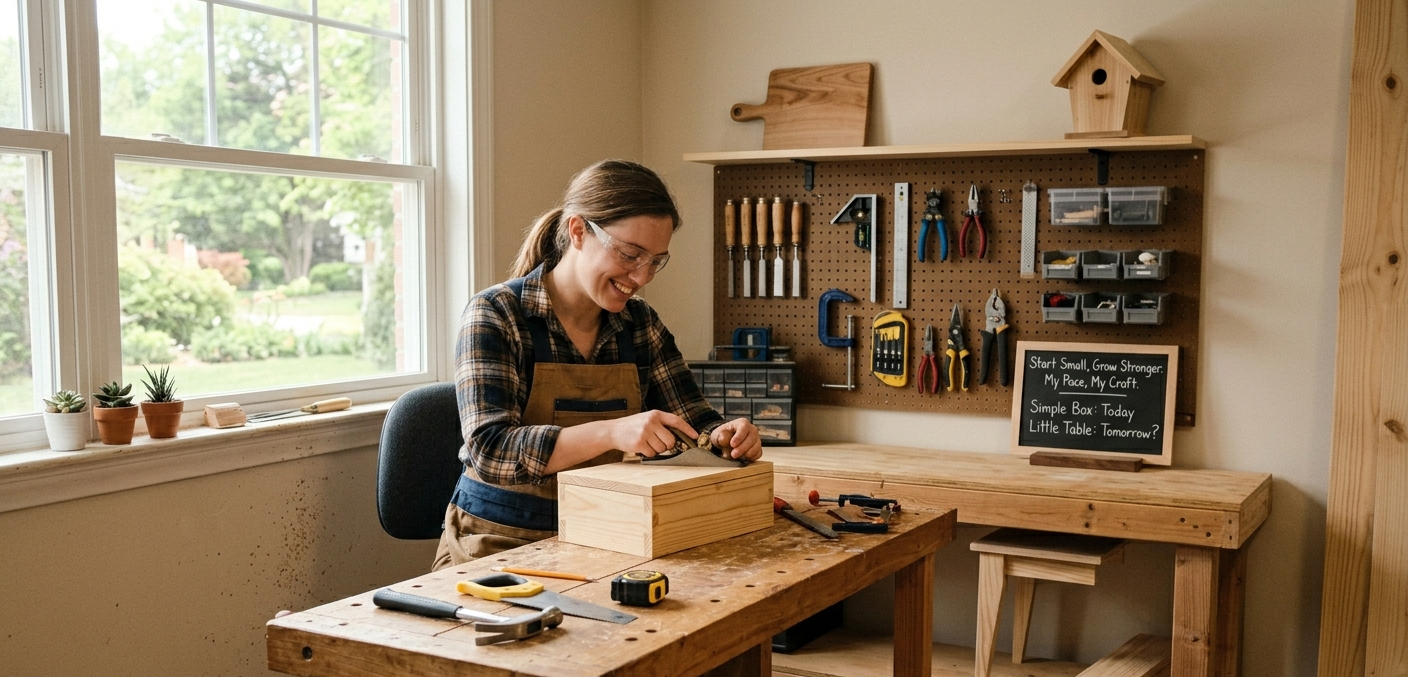
Beginner woodworking projects is one of the most practical and rewarding skills anyone can learn today. It allows you to transform simple pieces of wood into useful furniture, decorative items, or even products you can sell. Many people start beginner woodworking projects as a hobby, but over time it often grows into a passion or a profitable skill.
In a world dominated by screens and digital work, beginner woodworking projects offers something different. It gives you the opportunity to work with your hands, focus your mind, and create something tangible. The process itself is relaxing, while the results are satisfying.
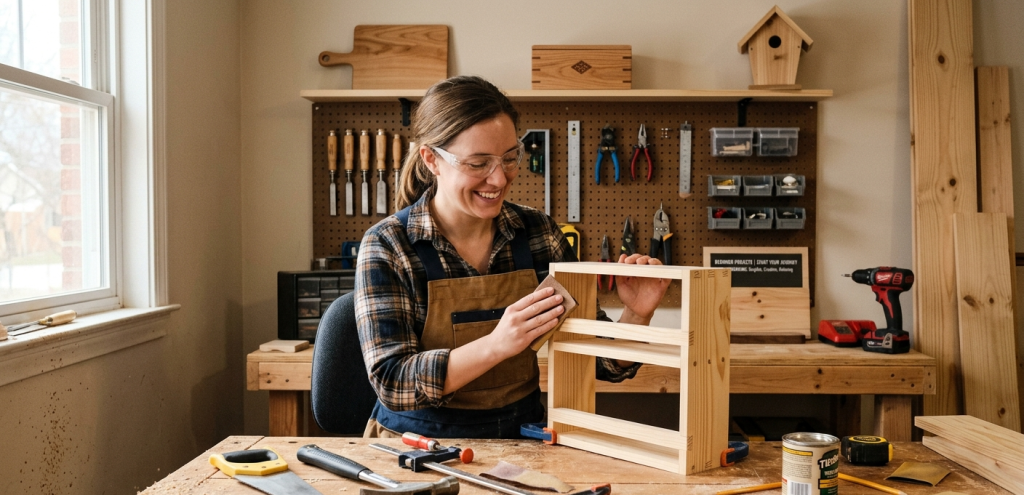
If you are new to this craft, don’t worry. This guide will walk you through beginner woodworking projects step by step, from tools and materials to your first project and beyond.
Why Beginner Woodworking Projects is Perfect to Start
Beginner woodworking projects is ideal because you can start small and improve gradually. You don’t need a large workshop or expensive tools in the beginning. Many successful craftsmen began beginner woodworking projects with just basic tools and simple projects.
Another advantage of beginner woodworking projects is flexibility. You can learn at your own pace and choose projects based on your skill level. Whether you want to build a small shelf or a simple table, the learning curve is very manageable.
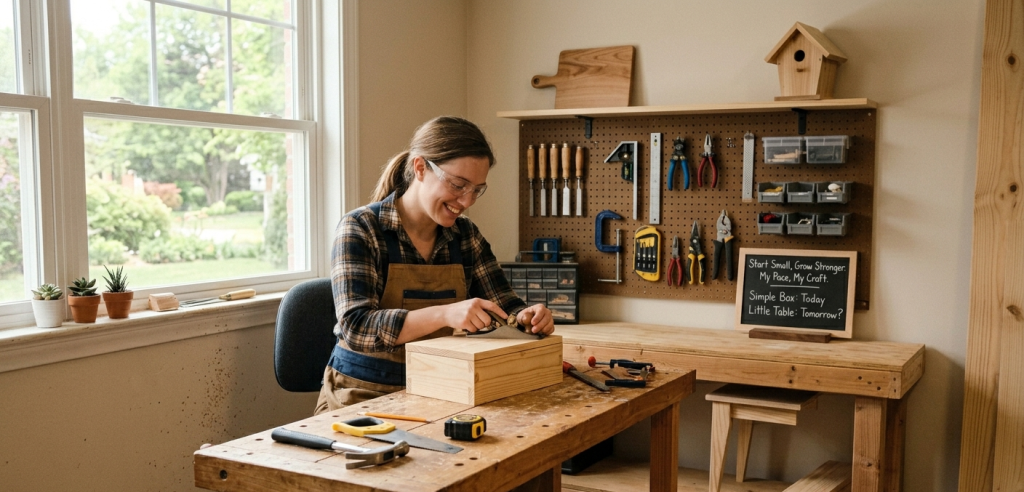
In addition, beginner woodworking projects helps develop patience, creativity, and problem-solving skills. These benefits make it more than just a hobby.
Essential Tools for Beginner Woodworking Projects
When starting beginner woodworking projects, you should focus on essential tools first. Avoid buying too many tools at once and prioritize what you actually need.
Hand Tools for Beginner Woodworking Projects
Hand tools are the foundation of beginner woodworking projects. They are affordable, easy to use, and help you understand basic techniques.
A hammer is used for driving nails and assembling parts. Screwdrivers are important for tightening screws. A hand saw allows you to cut wood manually with control. Chisels help shape and carve wood. A tape measure ensures accuracy, while a combination square helps create straight lines and angles.
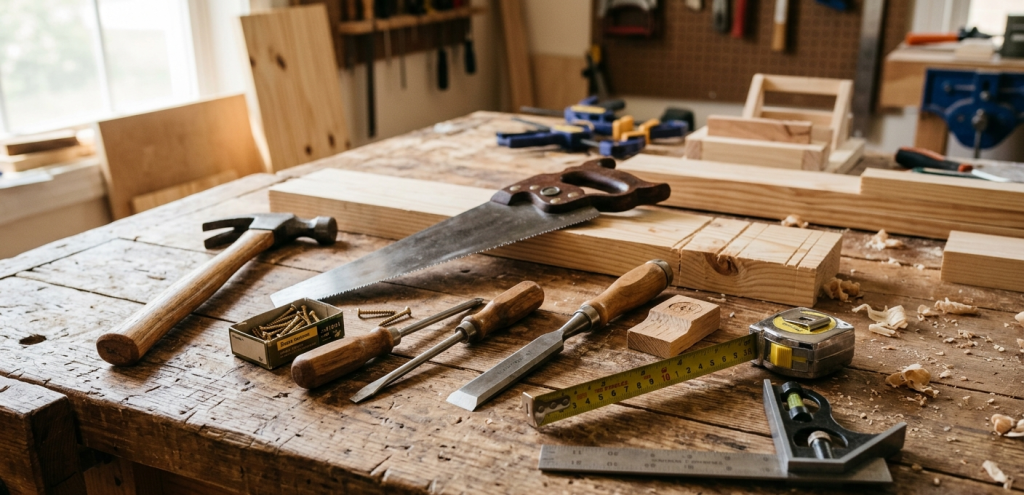
These tools are enough to start most beginner woodworking projects.
Power Tools for Beginner Woodworking Projects
As you progress in beginner woodworking projects, you can start using power tools to improve efficiency.
A drill is essential for making holes and driving screws. A circular saw helps make straight cuts quickly. A jigsaw is useful for curved cuts. A sander helps smooth surfaces faster.
Power tools are not required at the beginning, but they can significantly speed up your progress in beginner woodworking projects.
Understanding Wood Types in Beginner Woodworking Projects
Choosing the right material is very important in beginner woodworking projects. Each type of wood has different characteristics.
Softwood for Beginner Woodworking Projects
Softwood is ideal for beginner woodworking projects because it is easy to cut and shape. It is also more affordable.
Common examples include pine, cedar, and fir. These woods are perfect for practice projects and simple builds.
Hardwood for Beginner Woodworking Projects
Hardwood is stronger and more durable. It is often used for furniture and advanced projects.
Examples include oak, maple, and walnut. While hardwood is more challenging, it produces high-quality results.
For beginner woodworking projects, it is best to start with softwood before moving to hardwood.
Basic Techniques in Beginner Woodworking Projects
To succeed in beginner woodworking projects, you must master the fundamental techniques.
Measuring and Marking
Beginner woodworking projects requires precision. Always measure twice and cut once. Use proper tools to ensure accuracy.
Cutting
Cutting is a core skill in beginner woodworking projects. Start with straight cuts and focus on control and consistency.
Sanding
Sanding improves the appearance of your project. In beginner woodworking projects, smooth surfaces make a big difference in the final result.
Joining
Joining is how you connect wood pieces. Beginner woodworking projects usually involves screws, nails, and glue. These methods are simple but effective.
Safety Tips Every Beginner Must Know
Safety should always be your top priority in woodworking. Even basic tools can be dangerous if used incorrectly.
Always wear safety goggles to protect your eyes from dust and debris. Use gloves when necessary, especially when handling rough wood. Keep your workspace clean and organized to avoid accidents. Never rush your work, as mistakes often happen when you are in a hurry. Take the time to learn how to properly use each tool before using it.
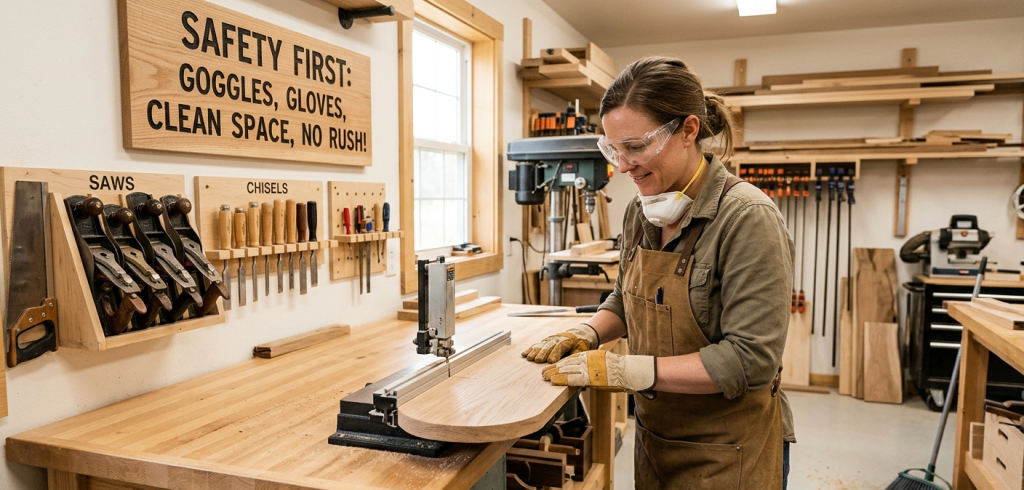
By following these safety practices, you can reduce the risk of injury and work with confidence.
Setting Up Your First Workspace
You don’t need a large or expensive workshop to start woodworking. A simple and organized space is enough for beginners.
You can set up your workspace in a garage, a backyard shed, or even a small corner of a room. The key is to have enough space to work comfortably and safely.
Keep your tools organized using shelves or storage boxes. Maintain a clean workbench so you can work efficiently. Make sure your workspace has proper lighting so you can see clearly while cutting and measuring.
A well-organized workspace not only improves productivity but also enhances safety.
Your First Woodworking Project
Starting with a simple project is the best way to build confidence and gain practical experience.
Some beginner-friendly project ideas include a wooden shelf, a simple stool, a picture frame, or a small storage box. These projects are easy to complete and help you practice essential skills.
Step-by-Step Example: Simple Wooden Shelf
First, measure and cut your wood according to the desired size. Make sure all pieces are even and accurate. Next, sand all surfaces to remove rough edges and create a smooth finish. Then, assemble the pieces using screws or nails, ensuring everything is aligned properly. After that, check the stability and alignment of the shelf. Finally, apply a finish such as paint or varnish to protect the wood and enhance its appearance.
This simple project teaches you measuring, cutting, sanding, and assembling, which are fundamental woodworking skills.
Common Mistakes Beginners Should Avoid
Many beginners make similar mistakes when starting woodworking. Being aware of these mistakes can help you avoid frustration and improve faster.
One common mistake is buying too many tools too soon. It is better to start with basic tools and upgrade gradually. Another mistake is ignoring safety rules, which can lead to accidents. Skipping measurements or rushing through them often results in poorly fitting pieces. Using the wrong type of wood can also affect the quality of your project. Finally, rushing through projects can lead to errors and poor results.
Avoiding these mistakes will make your learning process smoother and more enjoyable.
How to Improve Your Woodworking Skills
Improving your woodworking skills takes time, practice, and patience.
Practice regularly, even if it’s just small projects. Consistency is more important than speed. Learn from others by watching tutorials, reading guides, or joining woodworking communities. Trying new projects will challenge your skills and help you grow as a woodworker.
Over time, you will develop better techniques and gain more confidence in your work.
Turning Woodworking into a Business
Once you gain enough experience, woodworking can become a source of income.
You can create and sell furniture, home decor items, or custom wood products. Many people are willing to pay for handmade, high-quality items.
You can sell your products through online marketplaces, social media platforms, or local markets. Building a strong brand and taking high-quality product photos can significantly increase your chances of success.
Focusing on quality and customer satisfaction is key to building a sustainable woodworking business.
Tools Upgrade Guide for Beginners
As your skills improve, you may want to upgrade your tools to handle more advanced projects.
Intermediate tools include a table saw, router, and miter saw. These tools provide greater precision and efficiency.
Advanced tools such as a planer and band saw are useful for professional-level projects.
It is important to invest in tools gradually based on your needs and budget.
Wood Finishing Basics
Finishing is an important step that protects your wood and enhances its appearance.
Common types of finishes include paint, varnish, and oil. Each type offers different benefits depending on the desired look and durability.
Start by sanding the surface until it is smooth. Clean off any dust before applying the finish. Apply the finish evenly and allow it to dry completely.
A good finishing process can make even a simple project look professional.
Frequently Asked Questions
Is woodworking hard for beginners?
Woodworking for beginners is not difficult if you start with simple projects and learn basic techniques step by step.
How much does it cost to start woodworking?
You can start woodworking with a small budget by focusing on essential tools and affordable materials.
What is the easiest woodworking project for beginners?
Simple projects like a wooden shelf, a picture frame, or a small box are ideal for beginners.
Conclusion
Woodworking for beginners is an exciting and rewarding journey. It allows you to create useful and beautiful items while developing valuable skills. You don’t need expensive tools or advanced knowledge to start. With the right approach, anyone can learn woodworking.
The key is to start small, practice consistently, and enjoy the process. As you gain experience, you can take on more complex projects and even turn your hobby into a business.
If you’ve been thinking about starting woodworking, now is the perfect time. Take your first step today and begin building your skills and creativity through woodworking.
Advanced Woodworking Tips for Beginners
As you continue your journey in woodworking for beginners, it is important to start refining your techniques and understanding deeper aspects of the craft. Many beginners stay stuck at the basic level because they do not push themselves to improve. By applying a few advanced tips early on, you can significantly speed up your progress.
One important tip is to always plan your project before starting. Sketch your design on paper and write down measurements. This helps you visualize the final result and reduces mistakes during execution. Planning also allows you to estimate the amount of wood and tools required.
Another key tip is to learn grain direction. Wood grain affects how you cut, sand, and finish your project. Cutting against the grain can cause rough edges, while sanding along the grain produces a smoother finish. Understanding this small detail can dramatically improve your results.
You should also practice consistency in your cuts and measurements. Even a small difference of a few millimeters can affect the final structure. Precision is what separates beginner work from professional-quality craftsmanship.
Woodworking Budget Planning for Beginners
Starting woodworking does not have to be expensive. In fact, many beginners make the mistake of overspending on tools and materials they do not need.
A smart approach is to set a clear budget before buying anything. Focus on essential tools first, such as a hammer, saw, drill, and measuring tools. Avoid buying advanced machines until you are comfortable with basic techniques.
You can also save money by purchasing second-hand tools. Many used tools are still in excellent condition and cost much less than new ones. This is a great way to build your toolkit without breaking your budget.
When it comes to materials, start with affordable wood like pine. It is easier to work with and widely available. As your skills improve, you can gradually move to more expensive hardwoods.
Planning your budget wisely ensures that you can continue learning woodworking without financial stress.
Best Wood for Different Types of Projects
Choosing the right wood depends on the type of project you want to build. Not all wood is suitable for every purpose, and understanding this will help you achieve better results.
For indoor furniture, hardwood like oak or maple is a great choice because of its durability and strength. These woods are ideal for tables, chairs, and cabinets.
For outdoor projects, you should use wood that is resistant to moisture and weather conditions. Cedar and teak are excellent choices because they naturally resist decay and insects.
For beginner practice projects, softwood like pine is the best option. It is easy to cut, sand, and shape, making it perfect for learning basic techniques.
Using the right wood not only improves the quality of your project but also makes the building process easier.
Step-by-Step Beginner Project in Detail: Wooden Storage Box
To deepen your understanding of woodworking for beginners, let’s go through a more detailed project that you can try at home.
Start by preparing your materials. You will need wooden boards, screws, wood glue, sandpaper, and basic tools like a saw and drill.
First, measure and mark the dimensions of your box on the wooden boards. Accuracy is very important at this stage because it determines how well the pieces will fit together.
Next, cut the wood according to your measurements. Take your time and ensure straight cuts. If your cuts are uneven, the box will not assemble properly.
After cutting, sand all the pieces thoroughly. Smooth edges and surfaces will make the final product look more professional and safer to handle.
Then, assemble the box using wood glue and screws. Start with the base and attach the sides one by one. Make sure everything is aligned properly before tightening the screws.
Once assembled, check the stability of the box. If needed, reinforce weak areas with additional screws or glue.
Finally, apply a finish such as paint or varnish. This step protects the wood and enhances its appearance.
This project helps you practice measuring, cutting, sanding, assembling, and finishing in one complete workflow.
Understanding Woodworking Measurements and Accuracy
Accuracy is one of the most important aspects of woodworking. Without precise measurements, even simple projects can fail.
Always use reliable measuring tools such as a tape measure and combination square. Mark your measurements clearly using a pencil so they are easy to follow.
It is also important to understand units and consistency. Always use the same unit of measurement throughout your project to avoid confusion.
Double-check every measurement before cutting. This simple habit can save you time, materials, and frustration.
Over time, you will develop a habit of precision that improves the quality of all your projects.
Woodworking Joinery Basics for Beginners
Joinery is the method of connecting two pieces of wood together. For beginners, understanding basic joinery techniques is essential.
The simplest method is using screws or nails. This is quick and effective for most beginner projects.
Wood glue is another important method. When used correctly, it can create very strong bonds. Combining glue with screws often produces the best results.
As you progress, you can explore more advanced joinery techniques such as dowel joints, pocket holes, and dado joints. These methods provide stronger and cleaner connections.
Learning joinery improves both the strength and appearance of your woodworking projects.
How to Maintain Your Woodworking Tools
Taking care of your tools is just as important as learning how to use them.
Always clean your tools after use to remove dust and debris. This helps maintain their performance and extends their lifespan.
Keep cutting tools sharp. Dull blades are not only less effective but also more dangerous because they require more force to use.
Store your tools in a dry and organized place. Moisture can cause rust and damage, especially for metal tools.
Proper maintenance ensures that your tools remain reliable and safe to use.
Common Beginner Projects to Build Confidence
If you want to improve quickly, you should work on a variety of small projects. Each project teaches different skills.
A wooden shelf helps you practice measuring and assembling. A picture frame improves your cutting accuracy. A small table introduces more complex structures. A storage box teaches you joinery and finishing.
By completing multiple small projects, you gain experience faster and build confidence in your abilities.
How to Learn Woodworking Faster
Learning woodworking efficiently requires a smart approach.
Start by focusing on one skill at a time. For example, spend a few days practicing cutting before moving on to sanding or joinery.
Follow structured tutorials rather than random projects. This helps you build knowledge step by step.
Track your progress by reviewing your past projects. Identify mistakes and find ways to improve.
Most importantly, stay consistent. Even short practice sessions can lead to significant improvement over time.
Expanding Your Woodworking Knowledge
As you grow in woodworking, you should continue expanding your knowledge.
Read books, watch tutorials, and explore new techniques. Learning from experienced woodworkers can give you valuable insights.
Experiment with different types of wood, tools, and finishes. This helps you discover what works best for your style.
Joining a woodworking community can also be helpful. You can share ideas, ask questions, and learn from others’ experiences.
Continuous learning is the key to mastering woodworking.
Final Thoughts
Woodworking for beginners is more than just a hobby. It is a skill that combines creativity, precision, and problem-solving. With the right approach, anyone can learn and enjoy the process.
By starting with basic tools, practicing essential techniques, and gradually taking on more complex projects, you can build strong skills over time. Avoid common mistakes, focus on safety, and always strive to improve.
Whether your goal is to create useful items for your home or start a small business, woodworking offers endless opportunities. The most important step is to start and keep learning.
Now is the perfect time to continue your journey in woodworking. Keep building, keep learning, and enjoy every step of the process.